Talking with Kids About Tough Topics
Talking with Kids About Tough Topics: Gentle Guidance for Hard Conversations
As parents and caregivers, we want to shield our children from the pain and uncertainty of life. But the truth is—kids face loss and change too. Whether it’s the death of a loved one, the declining health of a pet, or another tough topic, children need honesty, comfort, and reassurance from us.
These conversations aren’t easy, but they’re opportunities to nurture resilience, deepen trust, and remind our children that they are not alone.
Why Honest Conversations Matter
Children are incredibly perceptive. They notice changes in routines, moods, and behaviors long before we think they do. When we avoid talking about difficult things, kids may fill in the gaps with fear, guilt, or misunderstanding.
By being open in age-appropriate ways, we give them:
- A sense of security – knowing they can trust us to tell the truth.
- Permission to feel – realizing that sadness, worry, or even anger are normal.
- Tools for coping – learning how to process emotions in healthy ways.
Practical Tips for Having the Conversation
1. Choose the Right Setting
Pick a calm, private moment. These talks are best without distractions—maybe during a quiet walk, before bedtime, or while sitting together at the kitchen table.
2. Use Simple, Honest Language
Avoid euphemisms that may confuse children. Instead of saying, “The dog went to sleep,” be clear: “Our dog is very sick, and his body isn’t working the way it used to. He may die soon.”
3. Let Them Lead with Questions
Kids will process information at their own pace. Encourage them to ask anything, and answer gently—even if you don’t know the answer. Saying “I don’t know, but I’m here with you” is often enough.
4. Acknowledge Their Feelings
Don’t rush to “fix” sadness. Phrases like “It’s okay to cry” or “I feel sad too” validate their emotions and help them feel understood.
5. Offer Comfort and Hope
Balance honesty with reassurance. Remind them of the constants: “No matter what happens, I will be here for you. We will go through this together.”
Special Considerations for Different Ages
- Young Children (3–6 years): Keep explanations brief and concrete. Reassure them often of safety and love.
- School-Age Kids (7–12 years): They may want details or struggle with “fairness.” Be patient and answer directly.
- Teens: They may seem distant but still need space to talk. Respect their independence while reminding them you’re available.
Faith & Family Traditions
If your family practices faith, this is a natural time to share what you believe about life, death, and hope. Reading Scripture, praying together, or reflecting on treasured memories can provide comfort and grounding.
Helping Them Cope
- Encourage drawing, journaling, or writing letters to the pet or loved one.
- Create rituals—plant a tree, make a scrapbook, or hold a small goodbye ceremony.
- Maintain normal routines to provide stability.
Final Thoughts
Talking to kids about death or declining health is never easy—but it is one of the greatest gifts we can give them. By showing up with honesty, tenderness, and patience, we model that it’s okay to grieve, it’s okay to question, and it’s okay to hope.
Our children learn courage from our presence—not from having all the answers.
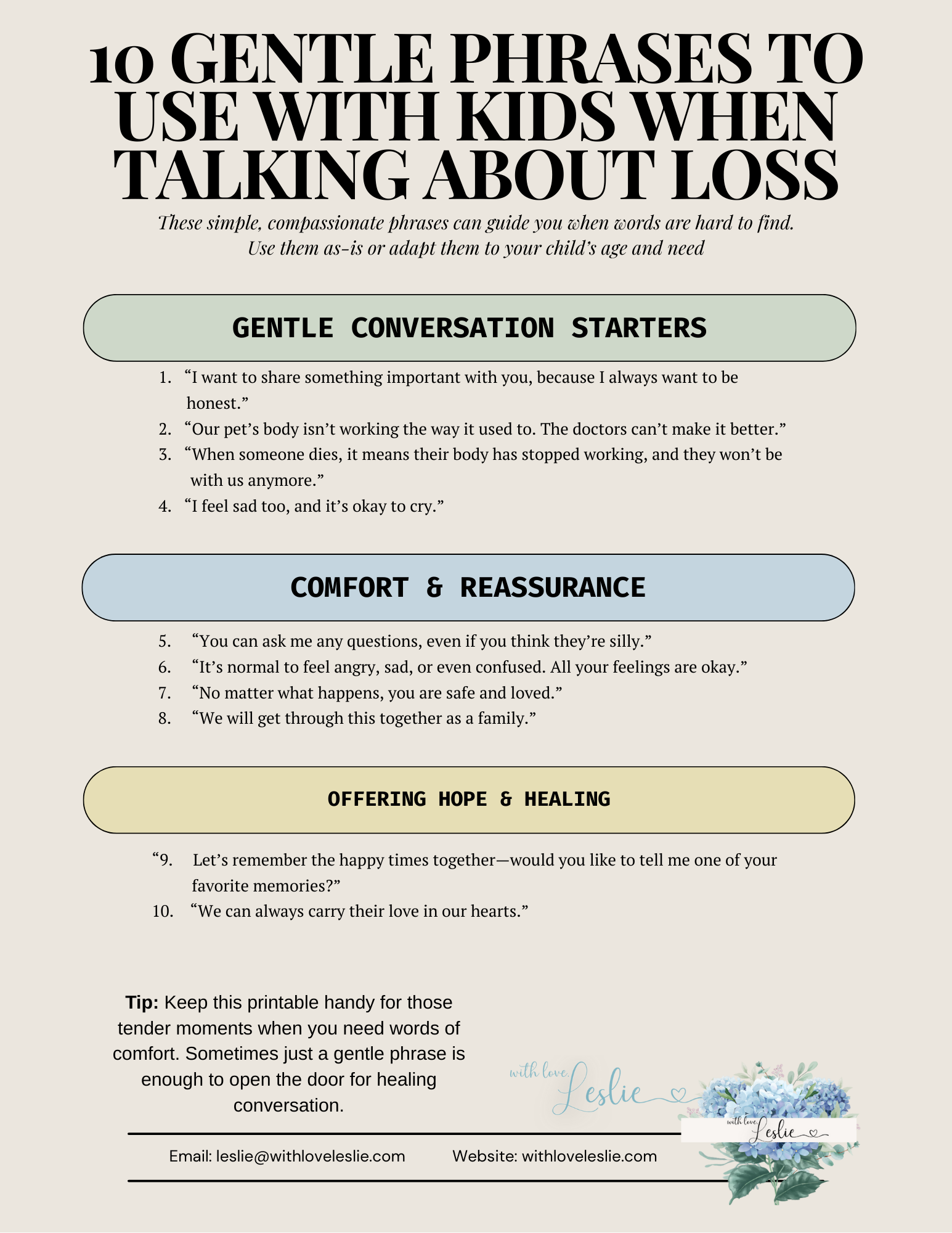
💡 Sometimes, in the middle of a hard conversation, it’s tough to know what to say. To help, I’ve created a simple guide with 10 gentle phrases you can use when talking with kids about loss. These words can bring comfort, honesty, and reassurance during tender moments.
👉 [Download the printable phrases here]